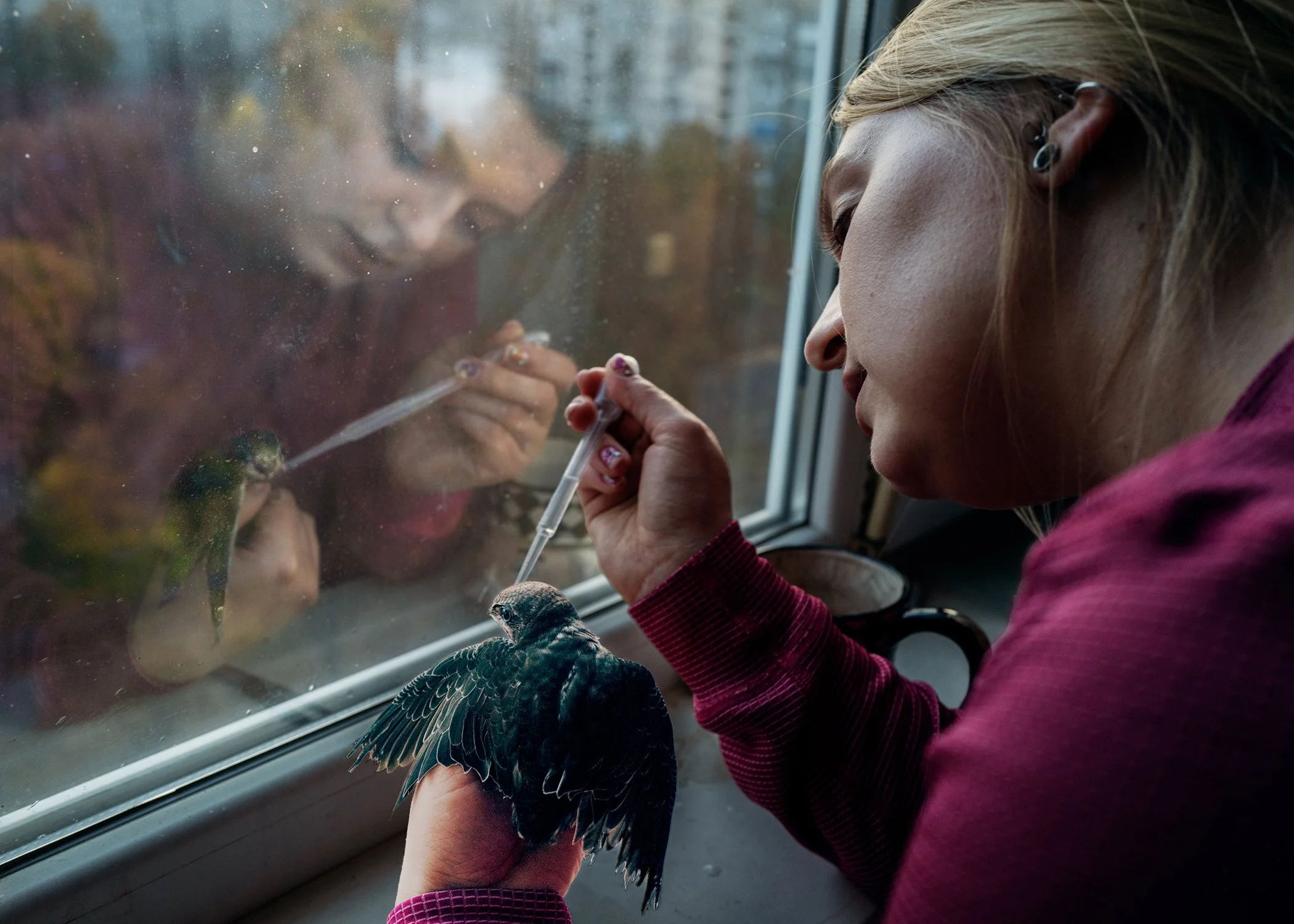
Manja The Rescuer, 2025 (from POLTAVALAND: Life At The Backdrop)
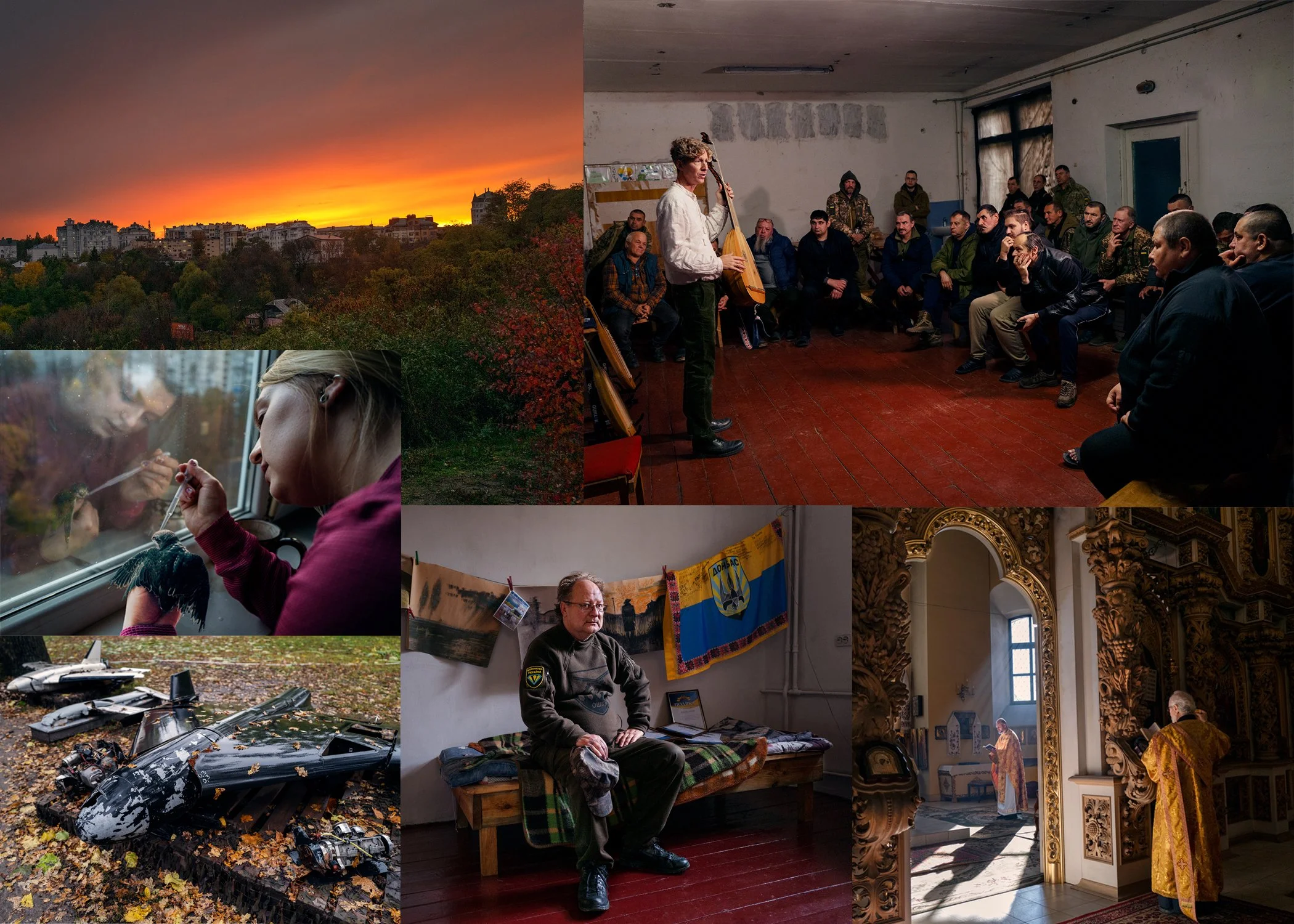
POLTAVALAND: Life at the Backdrop, (Ukraine, 2025-2026) - PROJECT PREVIEW
VIEW PROJECT (over 50 images) - to view the project for purposes of exhibitions or publications, please click the button above for request and I will send you a PDF.
POLTAVALAND: Life at the Backdrop, (Ukraine, 2025-ongoing)
Epigraph: “in order for me to write poetry that isn’t political, I must listen to the birds and in order to hear the birds the warplanes must be silent.” Marwan Makhoul
The quote above summarises perfectly the way I felt when I came back to Ukraine for the first time during the war in 2025.
POLTAVALAND: Life at the Backdrop continues the journey I began with POLTAVALAND: Ukraine’s Place of Power (2019–2021), my long-term exploration of Poltava’s unique cultural and spiritual landscape. In the earlier series, I photographed Poltava as a kind of mythical microcosm—a place where wild nature blended organically with everyday life, and where layers of mythology, spirituality, and personal memory shaped a world of deep harmony. Those images now feel like a tribute to a peaceful Ukraine that has been irrevocably altered.
My connection to Poltava is deeply personal: my maternal grandmother was born here, and since my first visit I have felt an inexplicable attachment to the land and its people. Returning to Poltava during the ongoing Russian invasion, I found a region transformed yet still charged with its unmistakable energy. Thousands of displaced people have found shelter here, and the daily rhythm carries the tension and uncertainty of war. But what I witness most is not destruction—it is resilience. Unlike many existing projects about the war in Ukraine, this work does not focus primarily on death or devastation. Instead, it tells the quieter, more complex story of how life persists at the edge of conflict.
In Life at the Backdrop, documentary reality intertwines with moments that feel almost surreal, echoing the mystical atmosphere that has always defined Poltava for me. The photographs reveal the coexistence of sadness and hope, life and death, fear and tenderness. War appears mostly in the periphery—felt more than shown—while the center of the frame belongs to people who continue to live, to care for one another, and to rebuild fragments of normality in uncertain times.
For me, this series is both a continuation and a transformation of the original project. It honors Poltava as it adapts to profound change and pays tribute to the quiet strength, endurance, and humanity of its people. Even in the shadow of war, life goes on—and in that persistence, I find a powerful testament to the Ukrainian spirit.